Shower options explained, in plain words
Tub or walk-in, swing door or sliding, round drain or long drain, a step or no step, a bench, a niche, a rain head. The choices you make for a new shower, what each one changes, and what has to be under the tile for any of it to last.
Tile and grout are not waterproof. A shower gets more water in a year than the roof of your house. So every choice on this page sits on one rule: whatever you pick on top, the waterproof layer underneath is what keeps your home dry. We build that layer ourselves, on every job, and you can see it before the tile goes on.
Here are the choices, one at a time. None of them is right or wrong. They change how the shower feels, how it is cleaned, and what it costs.
1. Tub, or walk-in shower
A tub with a shower over it is the most bathroom in the least space. A walk-in shower is easier to step into, easier to clean, and it is what most people want in the main bathroom today. If you have one bathroom and small children, keep the tub. If you have two bathrooms, a walk-in shower in one of them is the usual answer.
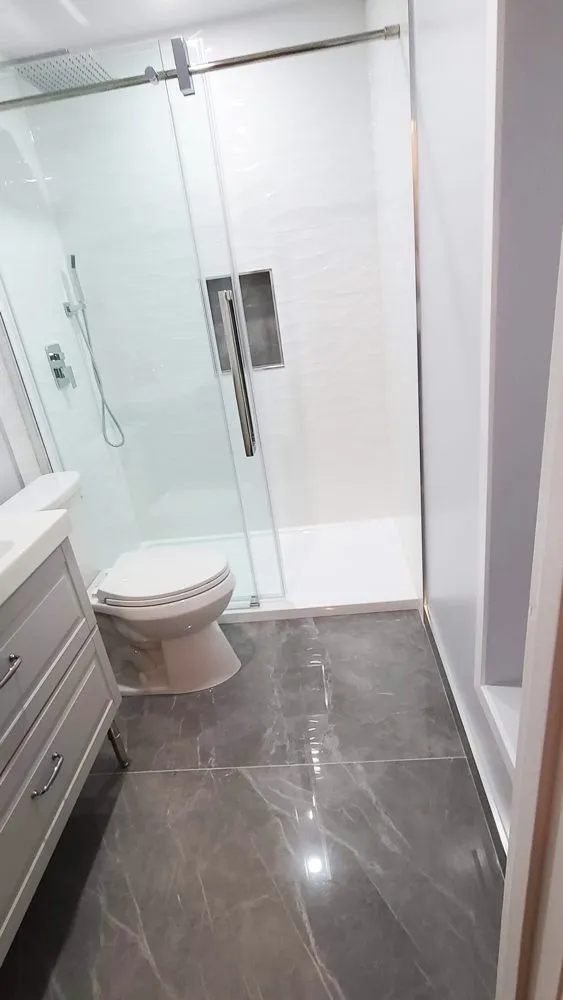
What it changes: taking a tub out and putting a shower in means a new floor, a new drain and new walls. It is a full rebuild of that corner, not a swap.
If you keep the tub, the walls around it still get the full treatment: waterproof boards, sealed seams, and the waterproof layer sealed down onto the rim of the tub, so water that runs down the wall cannot get behind it. Where the tile meets the tub we can fit a slim trim strip instead of a bead of caulk, which stays clean longer.
2. Swing door, sliding door, or one fixed panel
A swing door needs room to open into the bathroom. A sliding door needs none, so it suits a tight room or a shower in a tub-sized space. A single fixed panel with an open end is the cleanest look and the easiest to clean, and it works when the shower is wide enough that water does not escape.
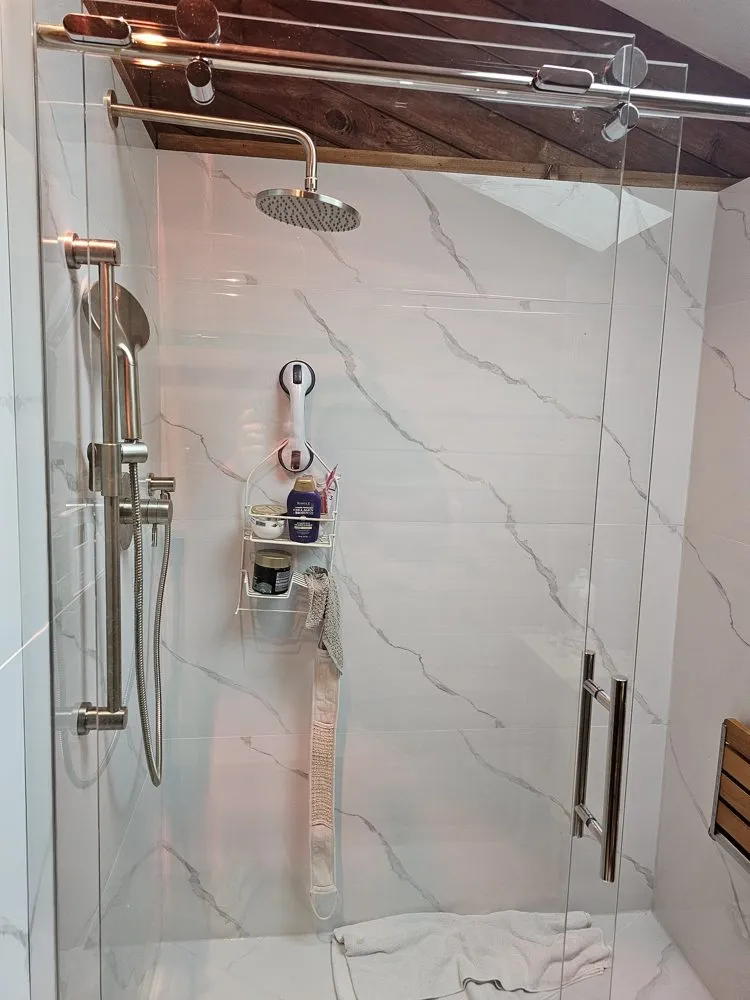
What it changes: clear glass, 8 to 10 mm thick, with no frame, costs more than a framed door, and it is the piece people notice first. We measure for the glass after the tile is on, so it fits to the millimetre.
3. A round drain, or a long drain
A round drain sits in the middle or the corner, and the floor slopes to it from four sides, so the floor tile has to be small pieces that can follow the slope. A long drain runs along one wall, the floor slopes one way, and you can use big tiles on the shower floor, even the same tile as the rest of the bathroom, so the room reads as one floor. The long drain is also what makes a no-step shower possible.
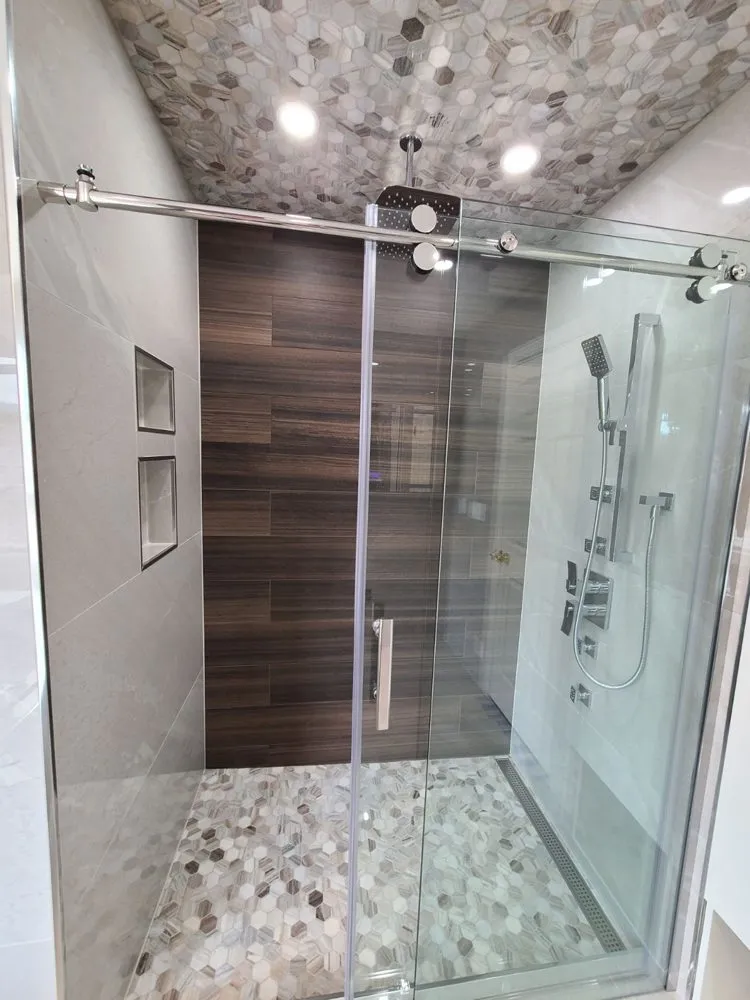
What it changes: a long drain costs more than a round one and takes more work to set. Either way, the waterproof sheet bonds straight onto the drain, so there is no gap where water could get under the tile.
4. A step, or no step
A curb is the small step you walk over. It keeps water in and it is the simplest to build. No step means the shower floor is level with the bathroom floor. It looks like one open room, it is the safest way in and out, and it needs the floor under the shower to be lowered so it sits level with the room and water still runs to the drain.
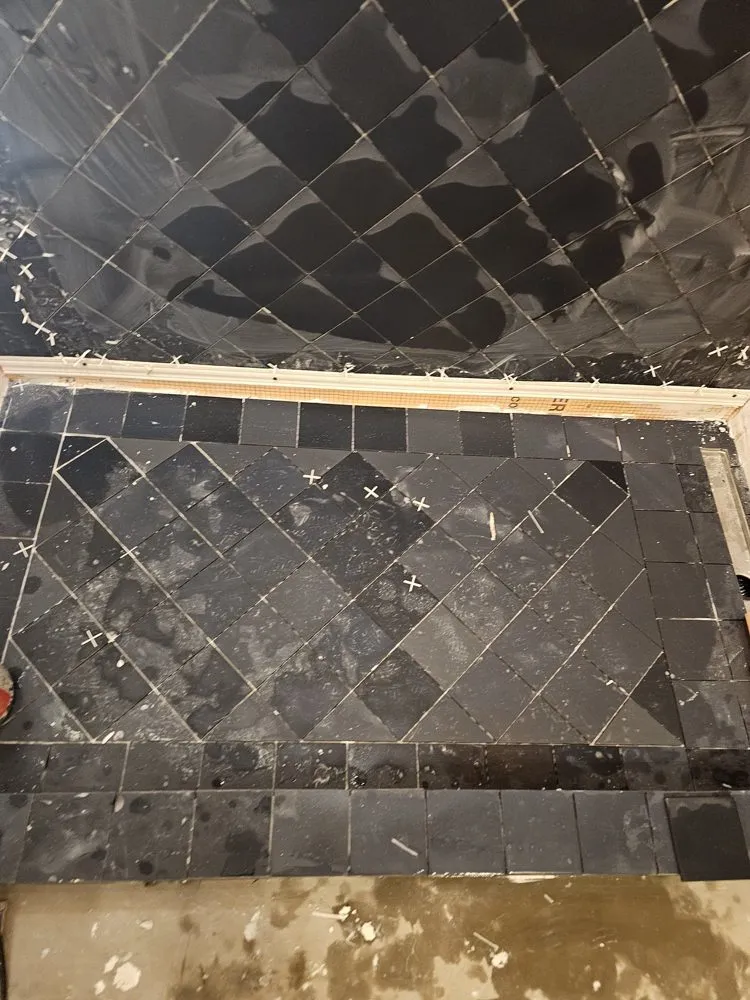
What it changes: no step is more work in the floor and usually a long drain. We lower the floor under the shower rather than raising the rest of the bathroom, and that is why a no-step conversion starts from $10,000 instead of $5,000. We check the floor at the free visit and tell you if yours allows it.
5. A bench, and a niche
A bench is a seat built into the shower, tiled like the walls. It makes the shower easier for anyone who cannot stand for long, and it is where a hand shower earns its keep. A niche is a shelf cut into the wall for shampoo, so nothing sits on the floor or hangs off the glass.
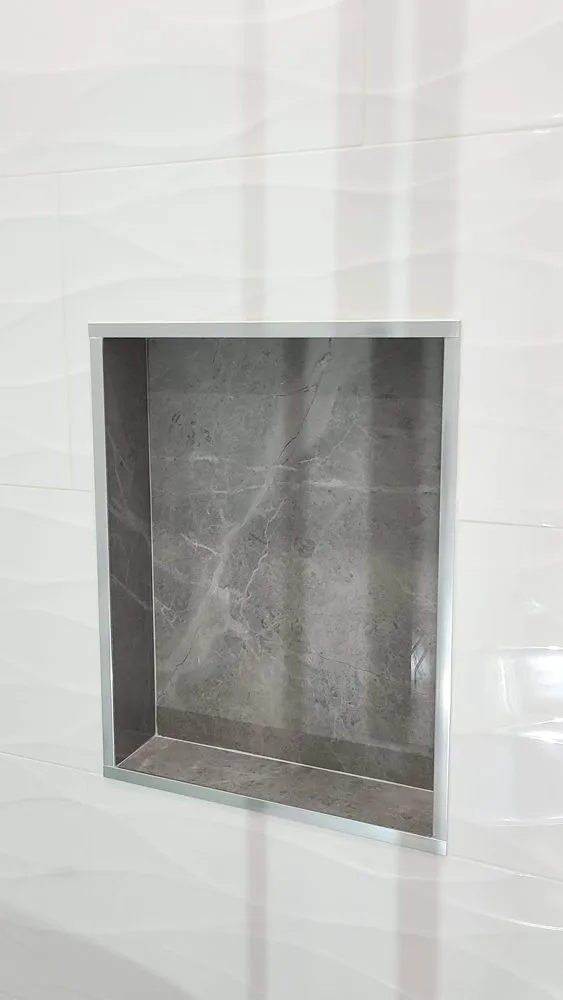
What it changes: both are built before the waterproof layer goes on, so they are sealed like the rest of the shower. A niche is a small add. A bench is more, because it is a tiled box that has to shed water.
6. Rain head, hand shower, body jets
A rain head sits overhead and falls straight down. A hand shower on a bar is what you use to rinse the walls and wash a dog. Body jets spray from the wall. You can have all three on one valve, but each one is pipework behind the wall, so decide before the walls close.
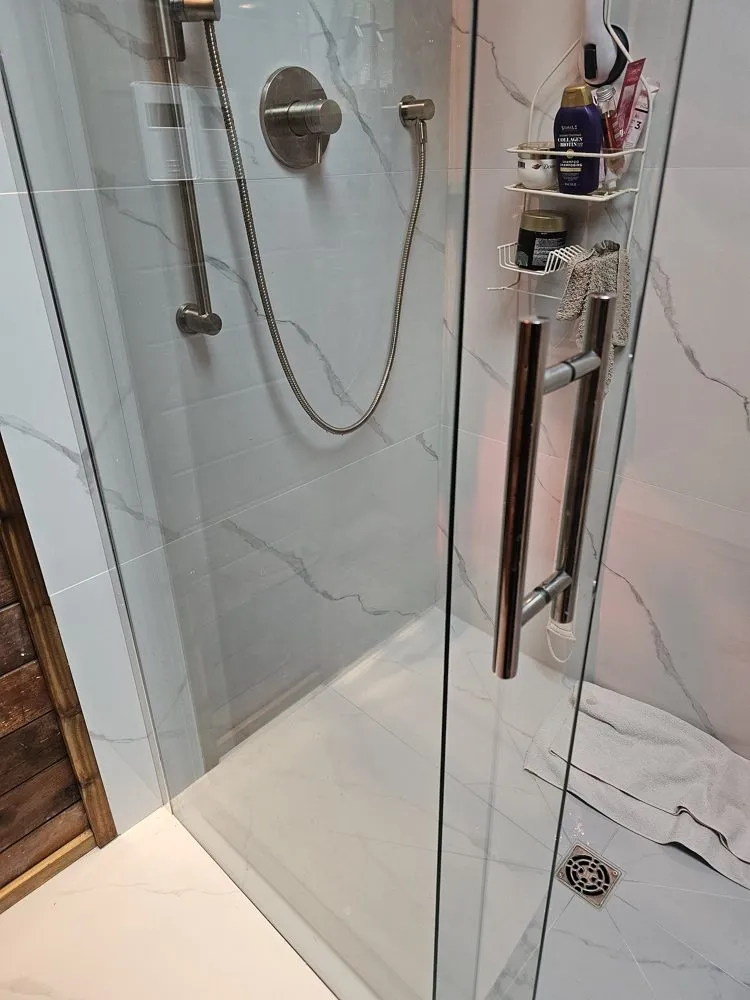
What it changes: more outlets, more plumbing, and a valve that can run them. Pick the taps at the start, because the holes in the tile are cut around them.
7. A steam shower
A steam shower has a steam generator, a door that closes tight, a seat and a tiled ceiling. It is a real luxury and a bigger job. Steam is water in the air, so the walls, the floor and the ceiling all get the waterproof layer, every pipe and light that comes through it is sealed, and the ceiling is sloped so drips run to the wall instead of onto you. A home steam shower that is used now and then can use the same waterproof sheet as a normal shower; one that runs all day, like a gym’s, needs a sheet more than twice as thick. Ask us about it at the visit.
What has to be under all of it
Whatever you choose on top, this is what we build underneath, in order. The drawing is ours; the layers are shown apart so you can see each one.
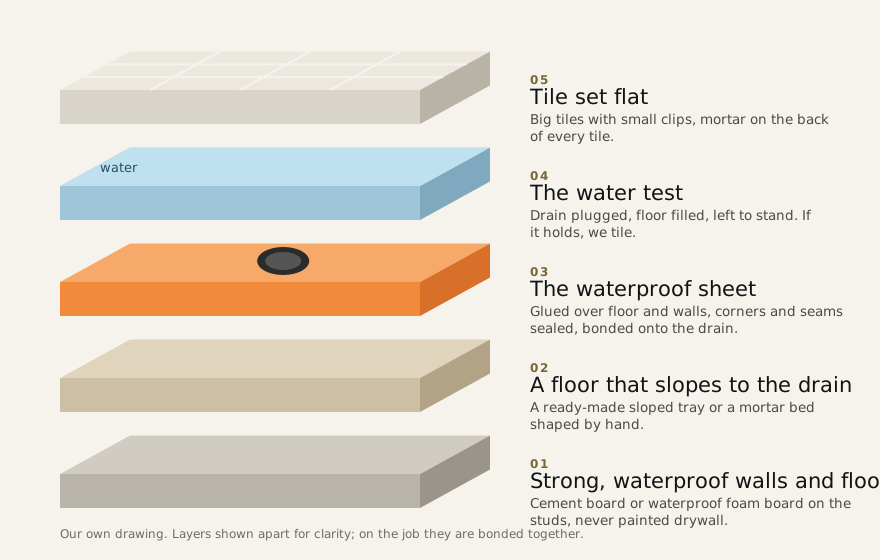
- Schluter Kerdi-Board walls. A waterproof foam board made for showers, never painted drywall, screwed to the studs. Every seam and every screw hole gets a sealing strip, and the holes for the taps get their own seals.
- A floor that slopes to the drain. Either a ready-made sloped tray or a mortar bed we shape by hand.
- The waterproof sheet. The Schluter Kerdi membrane, glued over the floor and walls, with ready-made Kerdi corners, strips over every seam, and a Kerdi drain the sheet bonds onto. One system from one maker.
- The water test. We plug the drain, fill the floor, and let it sit. If it holds, we tile.
- Tile set flat. Big tiles set with small clips so every edge lines up, and mortar on the back of every tile.
When the whole shower is built as one system from one maker, the maker stands behind it: Schluter’s shower system carries a 10-year warranty on materials and labour, and a lifetime one when it is registered within 90 days.
If you want to see any of these in a real home, our projects page shows finished showers in Coquitlam, Port Coquitlam, Delta and Fort Langley. If you want a price, book a free visit. We measure the room, listen to what you need, and bring ideas.